
How Concert Ticketing Software Helps Promoters Increase Revenue
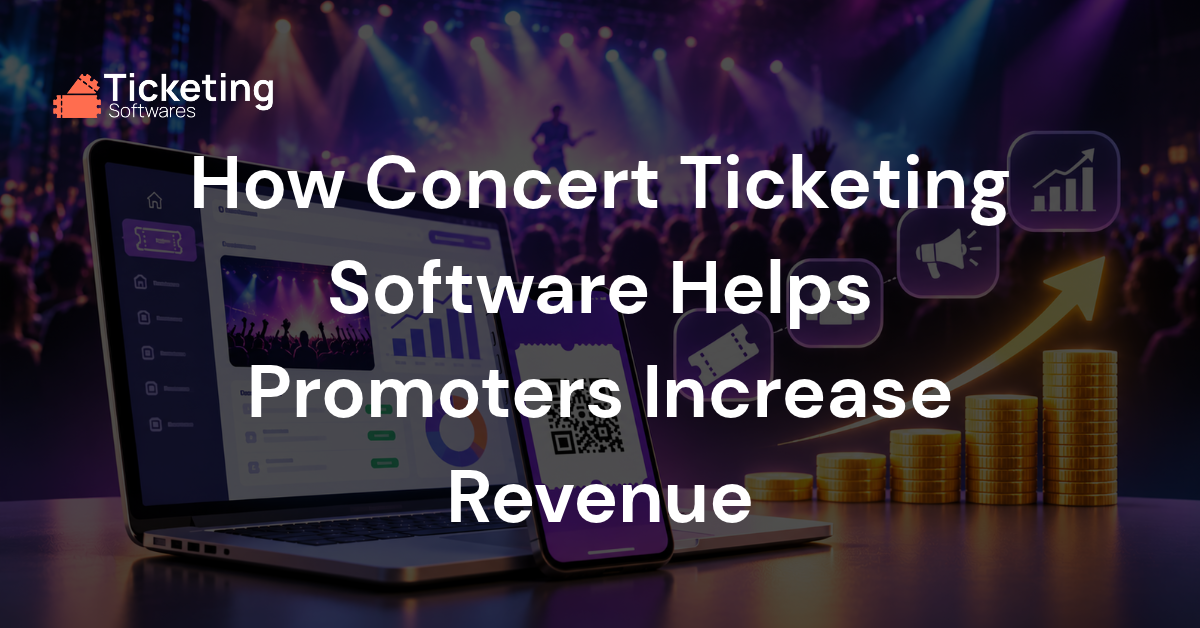
Say you promote a club show and sell it through a marketplace. By the time the doors open, a slice of every ticket has gone to the platform, you have no email list from the night, and the only way to reach the same crowd for your next show is to pay for ads. The room sold out. The business still feels thin.
That gap is where concert ticketing software earns its keep. Concert ticketing software is the system a promoter uses to publish shows, sell tickets, collect payments, control entry and read sales data from one place. Run it under your own brand and the economics shift, because the fee margin and the buyer list stay with you.
Quick answer: Concert ticketing software helps promoters increase revenue by cutting per-ticket platform fees, supporting presales and tiered pricing, handing over the buyer list for direct marketing, and controlling entry with scanned tickets. The gains come from margin kept and repeat buyers reached directly, not from selling one extra ticket.
Where does the extra promoter revenue actually come from?
Promoter revenue improves in four places: fees, pricing, repeat sales and leakage at the door. On a third-party marketplace the platform sets the fee model and controls checkout. On a platform you own, you set the fee structure, so you can keep the margin, pass a lower fee to fans, or split it with the venue.
- Fees. You decide who pays what on each order instead of renting someone else’s rate card.
- Pricing. Tiers, presales and add-ons let you sell the same night at several price points.
- Repeat sales. Past buyers are the cheapest audience you will ever market to.
- Leakage. Scanned, single-use tickets close the gap between tickets sold and people admitted.
None of these is dramatic alone. Together, over a season of shows, they are the difference between a break-even calendar and a profitable one.
Which pricing tools matter most for concerts?
Tiered pricing and presales matter most for concerts, because demand arrives in waves rather than evenly. Early-bird tiers reward fans who commit before the full lineup is out, access codes let a fan club, sponsor or mailing list buy before general sale, and separate ticket types for general admission, VIP and add-ons capture different willingness to pay inside one on-sale.
One caution. Tier jumps annoy fans when they come as a surprise. Publish the schedule of price steps on the event page so the next tier reads as a deadline, not a trick.
Why does owning the buyer list change a promoter’s income?
Owning the buyer list changes a promoter’s income because the cheapest ticket to sell is the one sold to someone who has already bought from you. On many marketplaces the platform holds the customer relationship. With a white label platform on your own domain, orders and attendee details sit in your own admin panel.
That list is useful in plain, unglamorous ways. Announce the next show to people who attended the last one in the same genre. Offer a presale code to repeat buyers. Send a reminder to the people who looked at a date and did not buy. This only pays off if you run more than one show, though. A promoter with a single annual festival gets less from a list than a venue with a weekly calendar.
How does ticketing software cut losses on the night?
Ticketing software cuts door-side losses by issuing QR-coded tickets that are validated when scanned, so a screenshot passed around a group admits one person rather than ten. Staff scan at the gate, the system marks the ticket as used, and you can watch check-in counts as they happen.
That live count is quietly useful. If a headline set starts at ten and the room is half full at nine, you know before the bar manager does. It also gives you a clean attendance figure to settle with the venue and artist, instead of an estimate argued over the next morning.
What should promoters check before choosing a platform?
Before choosing concert ticketing software, a promoter should check six things, in roughly this order:
- Fee model. Per-ticket fees, a monthly subscription, or a one-time license each produce very different margins over a busy year.
- Branding and domain. Tickets, emails and checkout should carry your name, not the vendor’s.
- Payment flow. Find out which gateway is used, who holds the money, and exactly when payouts land.
- Seating support. If you run reserved seating, ask to see the seat map editor, not a screenshot of it.
- Scanning. Test the scanning flow on a real phone before you commit.
- Reports. You want sales and attendee exports you can open in a spreadsheet.
Skip any vendor who will not put the payout schedule in writing. Everything else can be negotiated; cash timing cannot.
How does a white label platform compare with a marketplace?
A marketplace is faster to start and brings its own discovery audience, while a white label ticketing platform gives you your own brand, domain, fee model and attendee data. Neither is wrong. They suit different stages of a promoter’s business.
- Marketplace: quick setup, built-in audience, per-ticket fees, platform owns the buyer relationship.
- White label platform: your brand and domain, your data, your margin, and the marketing is your job.
Ticketing Softwares is the second kind. It is sold as a one-time license with zero commission and twelve months of support, and the company says a launch takes about seven days. You can see what is included on the features page and the pricing page. If you have never sold outside a marketplace’s audience, a sensible middle path is to keep the marketplace for discovery and move repeat fans to your own storefront.
Frequently asked questions
Is concert ticketing software worth it for a small promoter?
It is worth it once you run enough shows that per-ticket fees add up to more than a license would cost. A promoter doing a few shows a year may be better off on a marketplace. A promoter with a regular calendar usually is not.
Can I sell reserved seats and general admission for the same concert?
Most platforms support both, and Ticketing Softwares includes seat maps alongside general admission ticket types. Ask any vendor to build a mixed-layout test event for you before you sign.
Who receives the money from ticket sales?
That depends on how the payment gateway is set up. With your own platform, payments are typically connected to your gateway account, which is why confirming the payout schedule matters.
How long does it take to launch a branded ticketing site?
Ticketing Softwares states about seven days for a launch. Plan extra time for your own artwork, ticket types and test purchases.
If you are weighing a marketplace against your own platform, the post on how white label ticketing platforms work for organizers covers the trade-offs from the organizer’s side. Festival teams may also want the music festival ticketing page. When you are ready to see the admin panel in action, book a 1:1 walkthrough.


Ready to Transform Your Ticketing?
Join thousands of venues and organizers who trust Ticketing Softwares to power their events. Start your free trial today.
Schedule a DemoThank you! Your submission has been received!
Oops! Something went wrong while submitting the form.


